

Wool Wash Guide
Wool is one of those fabrics people are scared to wash — and honestly, fair enough. Treat it like normal laundry and it will shrink, felt, or stretch into a completely new shape. But with the right settings, the right detergent, and the right drying method, wool is actually one of the easiest fibres to look after.
If you’re not sure how to wash wool without shrinking it, here’s the exact method that works
This guide walks you through how to wash wool safely in a Samsung washing machine, why you shouldn’t mix it with other fabrics, what you can add to a wool wash, and the alternative care options if you don’t want to run a full cycle for just one item.
If you’ve ever wondered how to wash wool without shrinking it, this guide covers every step — from detergent choice to drying.
Table of Contents
- Can You Wash Wool in a Washing Machine?
- Best Settings for Washing Wool
- If You Don’t Have a Wool Cycle
- How to Wash Wool by Hand (Step-by-Step)
- Why Wool Detergent Is Better Than Normal Detergent
- Best Wool Detergents (UK)
- How to Dry Wool Without Stretching It
- Common Wool-Washing Mistakes to Avoid
- Wool Care FAQ
Why Wool Needs Special Care
Wool fibres behave differently from cotton or synthetics. They’re sensitive to:
- Heat
- Friction
- Fast spinning
- Enzymes in regular detergent
When wool is exposed to the wrong conditions, the fibres tighten and lock together — that’s felting. Once it happens, you can’t reverse it. That’s why the correct cycle matters.
Choosing the Wool Cycle on a Samsung Machine
Samsung’s Wool programme is designed specifically for natural fibres. It uses:
- Lower drum movement Slow, gentle rocking with long pauses so the garment isn’t slapped around the drum.
- More water The item floats instead of being dragged.
- Reduced spin Usually 600–800 rpm, which prevents stretching.
- Low temperature Typically 20–30°C, which protects the fibres from heat damage.
Most Samsung Wool cycles run for 40–60 minutes, depending on the model and load size.
Can You Mix Wool With Other Clothes?
Short answer: no.
Part of knowing how to wash wool properly is understanding what not to mix with it — heavy fabrics can ruin the fibres.
Wool needs its own environment. Mixing it with other fabrics causes problems:
- Heavy items (jeans, towels) pull and distort the knit.
- Cotton absorbs water first, leaving wool to rub against the drum.
- Synthetics shed fibres that cling to the wool.
- Zips and buttons can snag the knit.
If you only have one wool item, that’s completely fine — wool cycles are designed for small loads.
What You Can Add to a Wool Wash
If you really want to bulk out the load, you can add a couple of light delicates, such as:
- Silk
- Viscose
- Modal
- Lightweight scarves
- Lingerie
Avoid anything bulky, rough, or structured. The goal is to keep the load soft and low‑impact.
Which Detergent to Use?
The best wool detergents are enzyme-free and pH-neutral to prevent shrinkage and fiber damage.
When you’re learning how to wash wool, using a proper wool detergent makes the biggest difference to softness and shape.
These detergents are designed for anyone figuring out how to wash wool safely without damaging fibres. When you’re deciding how to wash wool, detergent choice matters more than you think. Always go for wool‑safe or non‑bio liquid.
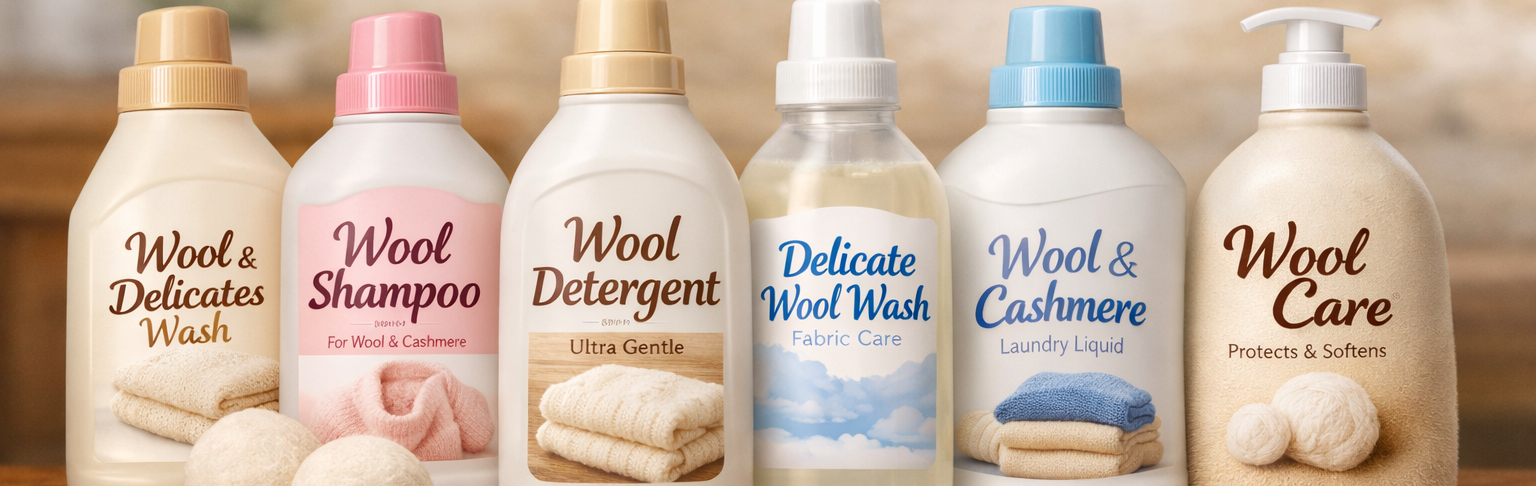
Normal detergent is too harsh for wool. It strips the natural oils that keep fibres soft and flexible, leaving jumpers scratchy or misshapen. Wool detergents are pH‑neutral and enzyme‑free, so they clean gently without wrecking the weave. Think of them as skincare for your clothes — they wash, not fight.
1. Ecover Delicate Laundry Liquid for Wool & Silk
Waterlily & Honeydew, 16 washes, 750 ml Approved by The Woolmark Company, Ecover’s plant‑based formula keeps wool and silk smooth while smelling fresh. Made in a zero‑waste UK factory, cruelty‑free, and biodegradable. The waterlily‑honeydew scent is what most people rave about — clean, soft, and not synthetic.
2. Woolite Handwash
12 washes, 750 ml Woolite protects delicate fibres and helps jumpers keep their shape. It renews softness and prevents fluff build‑up. Works for silk, cotton, and microfibres too. Some find the scent strong, others love it — either way, it leaves clothes feeling new again.
3. KnitIQ No‑Rinse Delicate Wash
500 ml, 100 washes Designed for knitters, this lanolin‑based wash cleans without rinsing and preserves natural fibres. The lavender‑citrus fragrance is subtle, and a tiny amount goes a long way. Ideal for handmade or vintage wool pieces.
4. Persil Silk & Wool Washing Liquid
15 washes, 750 ml A pH‑neutral, non‑bio formula that’s kind to skin and gentle on fibres. Works best in the machine’s wool cycle. The scent lasts surprisingly long, and jumpers come out soft, not stretched.
5. Stergene Gentle Care
500 ml Perfect for hand‑wash‑only garments. Lightly scented, non‑bio, and great for wool, cashmere, and silk. Colours stay bright, though some users in soft‑water areas say wool feels slightly rougher — worth testing for your local water type.
6. Clothes Doctor Eco Wash for Cashmere & Wool
500 ml, 32 washes UK‑made, vegan, and plastic‑free. This eco wash nourishes fibres and keeps knitwear looking new. It’s pricier, but supports British manufacturing and reduces plastic waste — a solid long‑term choice for anyone serious about wool care.
How to Prepare the Wool Item
- Turn it inside out
- Place it in a mesh laundry bag
- Zip the bag so sleeves don’t stretch
- Lay it flat inside the drum rather than bunching it up
This keeps the shape intact during the wash.
Running the Cycle
On your Samsung machine:
- Select Wool
- Set temperature to 30°C
- Keep spin at 800 rpm or lower
- Add a small amount of wool or non‑bio detergent
- Start the cycle — no pre‑wash, no intensive options, no bubble soak
The machine will rock gently, pause, fill with more water, and repeat. That’s exactly what you want.
If the Wool Isn’t Actually Dirty
Wool is naturally odour‑resistant. You don’t need to wash it every time you wear it.
Here are gentler alternatives:
- Air it outside for 30 minutes
- Steam it to refresh the fibres
- Run a cold rinse + 400 rpm spin for a quick freshen‑up
These options reduce wear and extend the life of the garment.
How to Dry Wool Properly
The final step in how to wash wool correctly is drying — flat, never hung, and away from heat.
This is the most important part.
Never hang wool straight from the machine.
The weight of the water will stretch it.
Instead:
- Lay a towel on a flat surface
- Place the wool item on top
- Gently reshape it to its original outline
- Leave it to dry flat
- If you want to speed it up, roll the towel with the garment inside to remove excess moisture, then lay it flat again on a dry towel
Avoid:
- Radiators
- Direct heat
- Tumble drying (unless the label specifically allows it)
Once dry, the garment should look and feel exactly the same size as before — that’s the sign of a proper wool wash.
f your machine doesn’t have a Wool cycle, you still have options — you just need to pick the gentlest programme your washer offers so you don’t shock, stretch or felt the fibres.
Here’s the HOW2NOT2 version — simple, safe, and UK‑friendly:
Best cycles to use if you don’t have a Wool cycle
1. Delicates / Hand Wash
This is the closest match to a Wool cycle. Low agitation, low spin, cool water — exactly what wool needs.
Use when: You’re washing jumpers, scarves, merino, cashmere, or anything labelled “hand wash only”.
2. Cold Wash (20–30°C)
If your machine has a cold or 20°C option, pair it with the lowest spin available.
Why it works: Wool hates heat and movement. Cold water + gentle spin = minimal fibre stress.
3. Quick Wash (ONLY if it’s gentle)
Some modern machines have a soft quick wash with low agitation. If yours is aggressive, skip this one.
Use only for: Light wool items that aren’t heavily soiled.
4. Rinse + Spin (LOW spin only)
If you’ve hand‑washed the wool, you can use Rinse + Spin to remove excess water — but drop the spin to 400–800 rpm max.
Never use: 1200–1600 rpm. That’s jumper‑ruining territory.
Cycles to avoid completely
- Cotton
- Synthetics
- Mixed Load / Mixed Fabrics
- Hygiene / Eco 40–60
- Anything above 30°C
- Anything with a high spin
These cycles are too rough and will stretch, shrink or felt wool.
Final Thoughts
Washing wool doesn’t have to be stressful. With the right cycle, the right detergent, and the right drying method, you can keep your wool items soft, clean, and perfectly shaped.
If you want a guide on washing cashmere, merino, or wool blankets next, let me know — each one has its own quirks.
Other Articles
If your machine is showing errors, here’s my full guide on fixing the Hoover E05 error: https://how2not2.com/hoover-e05-error
If you’re not sure which part of the detergent drawer to use, check my drawer cleaning guide: https://how2not2.com/how-to-clean-washing-machine-drawer (how2not2.com in Bing)
If your clothes sometimes smell damp after washing, this guide will help: https://how2not2.com/how-to-clean-a-smelly-washing-machine (how2not2.com in Bing)