
Watch this quick guide showing exactly how to use the Samsung washing machine detergent drawer and what each symbol means.
What do the Detergent Drawer Symbols Mean
Samsung washing machine detergent drawer symbols can look confusing at first, but each compartment has a specific job. Knowing which section to use for pre‑wash, main wash and fabric softener makes a huge difference to how well your clothes come out. Once you understand what the I, II and flower icons actually mean, using your Samsung drawer becomes simple.
Table of Contents
- What the Detergent Drawer Symbols Mean
- Pre‑Wash Compartment (I)
- Main Wash Compartment (II)
- Fabric Softener Compartment (Flower Icon)
- Where to Put Liquid, Powder & Pods
- How to Clean the Detergent Drawer
- Troubleshooting Common Drawer Problems
- FAQs
1. Understanding the Layout of the Samsung Detergent Drawer
The Samsung washing machine detergent drawer is split into three sections, and each one has a specific purpose
Most Samsung drawers have three main compartments:
- Compartment I – Main wash detergent (powder or liquid)
- Compartment II – Flower symbol – Fabric softener / conditioner
- Compartment III – Pre‑wash detergent
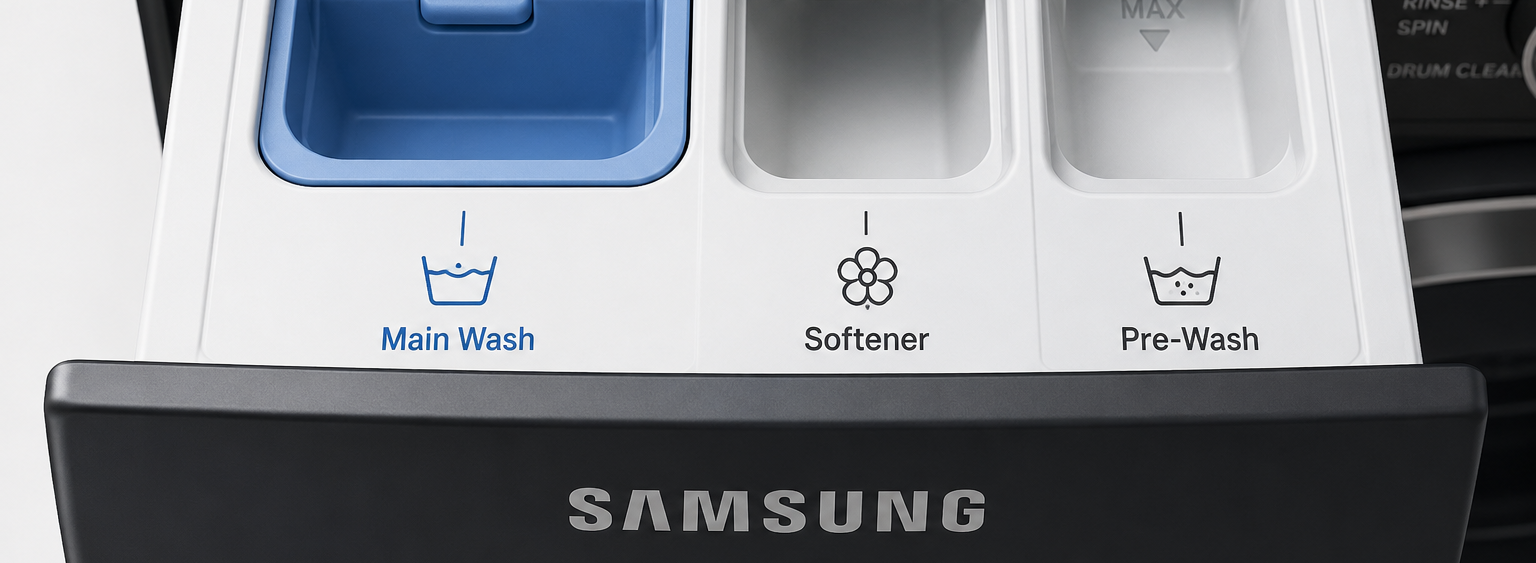
Some models also include:
- A blue liquid detergent insert
- A bleach inlet inside the drum area (NOT in the drawer)
Let’s break down each one properly.
2. Compartment I — The Main Wash Detergent Section
Compartment I is the main wash detergent section, used for both powder and liquid detergent. It handles the bulk of the cleaning during the cycle. Add your measured dose here, ensuring the blue liquid insert is fitted if you’re using liquid detergent to prevent it draining too early. This is the largest compartment in the drawer and the one you’ll use for almost every wash.
Using Powder Detergent
If you’re using powder, it goes directly into Compartment II with no extra parts needed. Powder works well for:
- Cotton cycles
- Heavily soiled laundry
- White loads
- Hot washes
Samsung designed this section to flush powder through evenly during the main wash.
Using Liquid Detergent
Liquid detergent can also go into Compartment II — but only when the blue liquid insert is fitted.
Without the insert, liquid runs straight into the machine too early, before the cycle even starts. That means:
- Poor cleaning
- Wasted detergent
- Streaks on clothes
This is why Samsung includes the blue attachment.
3. The Blue Liquid Detergent Insert (What It Does & How to Use It)
Samsung provides a blue plastic insert that slots into Compartment II. Its job is simple:
- It slows the flow of liquid detergent
- It keeps the liquid in place until the main wash begins
- It prevents detergent from draining away too early
How to use it
- Remove the drawer.
- Slot the blue insert into the main wash compartment (Compartment II).
- Pour your liquid detergent into the insert up to the MAX line.
- Slide the drawer back in.
If you switch back to powder, remove the insert — powder should never be used with the liquid attachment in place.
4. Compartment II – Fabric Softener (Flower Symbol)
This compartment is marked with the flower symbol and is only for fabric softener or conditioner. The machine releases it automatically during the final rinse. Fill it below the MAX line to prevent early siphoning. Never add detergent here, as it can block the drawer and affect rinsing performance. It’s designed to release softener during the final rinse, not before.
Key rules:
- Only fill to the MAX line
- Never put detergent here
- Don’t dilute softener unless your bottle instructs you to
- Overfilling causes the softener to drain immediately
If your softener disappears at the start of the wash, it’s almost always because the compartment was overfilled.
Most people only use one part of the Samsung washing machine detergent drawer, but using the right compartment makes a big difference to the wash.
Understanding the Samsung washing machine detergent drawer helps you avoid using the wrong compartment and improves your wash results.
5. Compartment III — The Pre‑Wash Section
This compartment is used for pre‑wash detergent when running cycles that include a pre‑wash stage. It gives heavily soiled clothes an extra cleaning boost before the main wash begins. Only add a small amount of detergent here, and never mix softener or liquids unless your model specifically supports it.
Use this only when:
- You select a cycle with a pre‑wash option
- Clothes are heavily soiled
- You’re washing muddy items, workwear, or sports kits
You can put powder or liquid here, but only if the cycle includes pre‑wash. If you don’t use pre‑wash, leave this section empty.
6. The MAX Lines — Why They Matter
Every compartment has a MAX line. Going above it causes:
- Softener draining too early
- Detergent blockages
- Poor rinsing
- Residue in the drawer
Stay below the line for the best results.
If your Samsung washing machine detergent drawer keeps filling with water or detergent, it’s usually caused by a blockage or using the wrong compartment.
7. Why You Shouldn’t Add Bleach to the Samsung Detergent Drawer
The Samsung detergent drawer is designed for detergent, softener, and pre‑wash products only. Chlorine bleach can damage the drawer’s plastic channels, affect the siphon system, and react with leftover detergent. To protect the detergent drawer and prevent blockages, Samsung recommends never adding bleach to any drawer compartment.
Safe Alternatives for the Detergent Drawer
If you want whitening power without damaging the Samsung detergent drawer, use oxygen‑based stain removers, non‑chlorine whitening powders, or drawer‑safe laundry boosters. These dissolve correctly in the main wash compartment and avoid the corrosion and chemical reactions caused by chlorine bleach.
When You Can Use Bleach Safely
Bleach should only be added directly into the empty drum, not into the detergent drawer. It’s safe during a Drum Clean or Maintenance Wash, where it helps remove residue and odours from the machine. Always run a rinse afterwards to ensure no bleach reaches the detergent drawer or your laundry.
8. Final Tips for Best Results
Using the correct amount prevents oversudsing and keeps the drawer working properly.
- Remove the drawer occasionally and rinse it under hot water.
- Use the blue insert only for liquid detergent.
- Never mix bleach with softener or detergent in the drawer.
- Powder is best for whites and heavily soiled loads.
- Liquid is best for quick cycles and coloured clothes.
Once you understand the Samsung washing machine detergent drawer symbols, you’ll avoid overdosing, residue, and poor wash results.
How Much Detergent Should You Use? (Quick Guide)
| Load Size | Soil Level | Water Hardness | Recommended Detergent Dose | Notes |
|---|---|---|---|---|
| Small Load (2–3 kg) | Light | Soft/Medium | 20–25 ml | Ideal for Quick Wash. Prevents oversudsing. |
| Small Load (2–3 kg) | Light | Hard | 30 ml | Hard water needs slightly more detergent. |
| Medium Load (4–5 kg) | Normal | Soft/Medium | 35–45 ml | Standard daily washing. |
| Medium Load (4–5 kg) | Normal | Hard | 50–60 ml | Helps counteract mineral content. |
| Full Load (6–8 kg) | Heavy | Soft/Medium | 60–70 ml | For dirtier items or gym wear. |
| Full Load (6–8 kg) | Heavy | Hard | 75–90 ml | Maximum recommended dose. Avoid exceeding. |
Quick Tips
- In soft‑water areas, reduce detergent by 20–30%.
- For Quick Wash, use half your normal dose.
- Too much detergent = excess suds, poor rinsing, and can contribute to 4C errors.
- Liquid detergent works best for short cycles.
FAQs About Washing Machine Detergent Drawer Symbols
What do the I and II symbols mean on a washing machine drawer?
The symbol I is for the pre-wash compartment, and II is for the main wash detergent. Most people only use compartment II unless they select a pre-wash cycle.
What is the flower symbol on the detergent drawer?
The flower or clover symbol is the fabric softener compartment. It should only be filled to the MAX line to prevent overflowing.
Where do I put liquid detergent in my washing machine?
Liquid detergent goes in compartment II (main wash). Some machines include a liquid insert to prevent it draining too early.
Why is my detergent drawer filling with water?
This usually happens because of a blocked siphon, mould buildup, or using too much detergent. Cleaning the drawer and housing normally fixes it.
Why is detergent left in the drawer after a wash?
Detergent residue is caused by low water pressure, blocked jets, or using thick liquid detergent without a liquid insert. Cleaning the drawer and jets helps.
Can I put detergent directly in the drum?
Yes, you can put detergent pods or capsules directly in the drum. Liquid and powder should go in the drawer unless the manufacturer states otherwise.
How do I clean a washing machine detergent drawer?
Remove the drawer, take out the siphon cap, rinse everything under hot water, scrub away mould, and clean the housing before reinstalling.
How to Clean a Washing Machine
Official Manufacturer Guides
Good Housekeeping UK: Laundry Advice
Troubleshooting Common Detergent Drawer Problems
Detergent left in the drawer after a wash
If detergent is still sitting in the drawer, it’s usually caused by blocked jets or thick liquid detergent. A quick clean normally fixes it. If the machine also struggles to drain, see our guide on Washing Machine Not Draining.
Fabric softener not dispensing
This happens when the siphon cap is clogged or the softener is too thick. Remove the drawer and rinse everything under hot water. For a deeper clean, follow our full guide on How to Clean a Washing Machine Filter.
Drawer filling with water
A drawer that fills with water or overflows usually means the jets are blocked with detergent residue or mould. Cleaning the drawer housing helps. If you notice leaks around the front, check out Washing Machine Leaking for more causes.
Bad smells coming from the drawer
Mould, softener buildup and trapped detergent cause most drawer smells. Remove the drawer, clean the siphon, and scrub the housing. If the whole machine smells musty, see our guide on Washing Machine Smells.
Drawer stuck or hard to remove
Most drawers have a small release tab in the middle. Press it down firmly and pull. If the drawer is jammed due to residue, soak it in hot water before trying again.